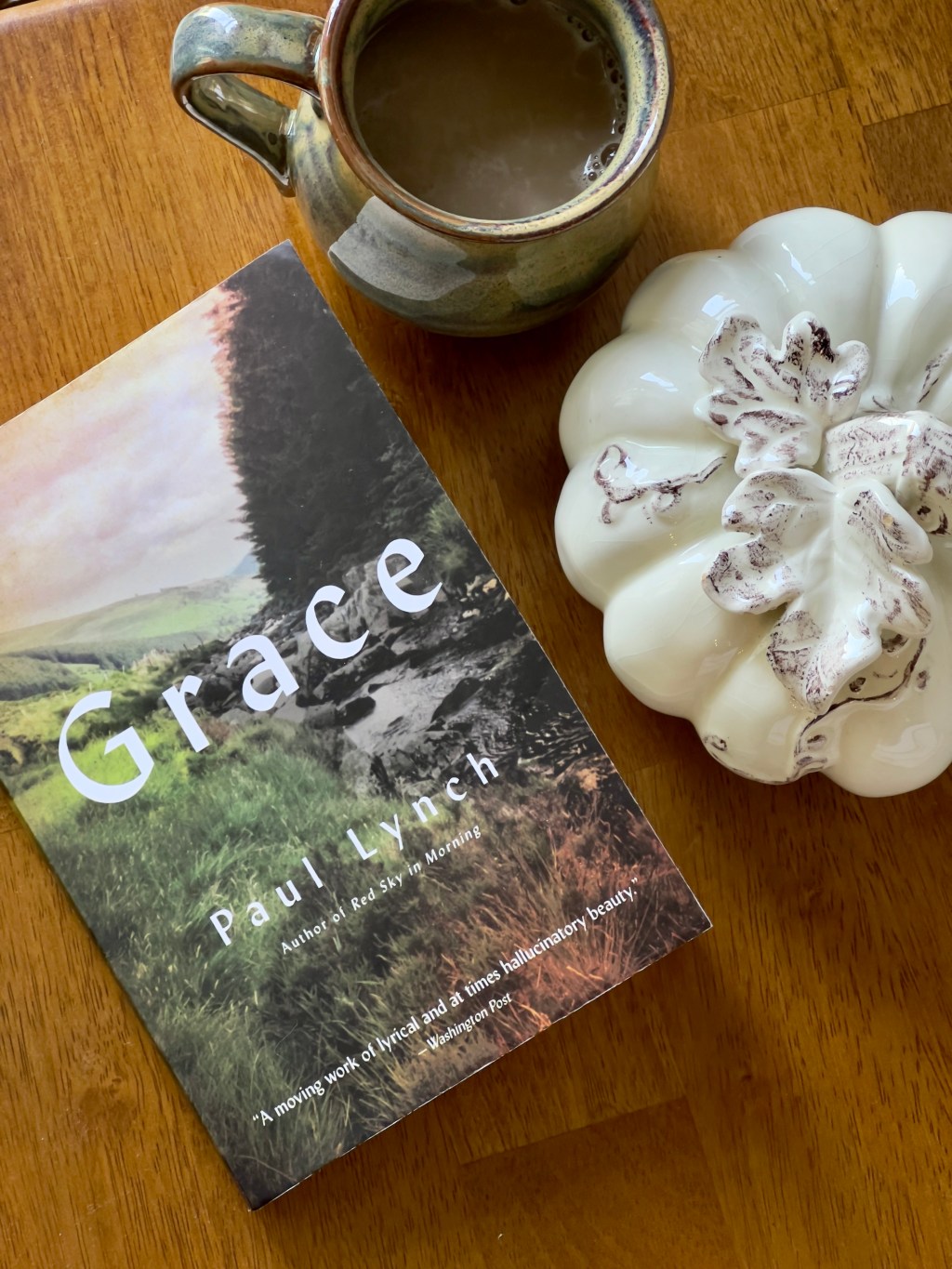
I have mentioned this book but not yet written a review on it. It is, unquestionably, a book with strong feelings. Before opening the first page we know 1) this is an Irish writer (they tend to be more raw and honest in their writing) and 2) the subject matter is the potato famine in Ireland in the mid-1800’s. In light of that, it is a beautifully written book that left me with a binding connection to the main characters. This is a suspended reality work of historical fiction based off the very real and difficult years of famine in Ireland. It is almost a magical realism piece of work. The Irish Times: ‘…Lynch fuses dreams, memory, myth and rumor with reality.’
Something that was a challenge at first, but that I quickly fell into rhythm and enjoyed – was the dialectal variations specific to European or Irish ways of speech. I have an entire page of ‘new words to me’ listed in the back of the book. (And that’s always a good thing!)
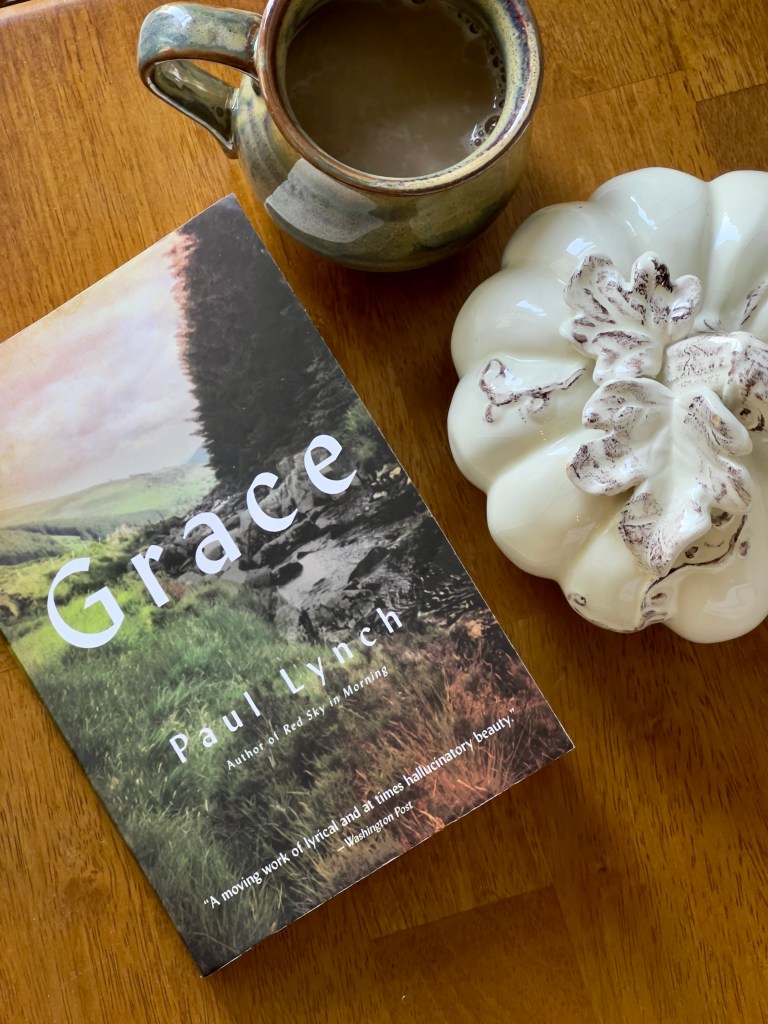
We first meet the main character, Grace, at 14 years of age when her mother (Sarah) takes her out to the wood chopping stump to cut off her long hair into a short, cropped boy cut. As her many siblings cry and scream in the chaos, her mother gives the directive to her eldest child: “It is your turn to be strong now.” And thus begins Grace’s thrust into the real world to make it on her own and possibly bring back a job and money to her starving family. The night before she is to leave, her beloved brother, Colly, hands her a gift. A box of cigars and a matchbox filled with strands of her hair (that he secretly grabbed in the mayhem) to give her strength till she can grow her treasured hair long again. As Grace set out early in the morning, filled with dread and confusion, she didn’t know that Colly had snuck out with her and would be following her on her unusual journey disguised as a boy, not a girl, in the stark and impoverished hillsides of Ireland.
As with any good coming-of-age story, Grace and Colly encounter several unique and suspicious characters. Some are kind and give what they can, others are stubborn and mean. As she describes Clackton – a horsemen on the cattle drive job she temporarily worked: “The way he walks within his own peace. There is a soothe in walking alongside him.” What a #lifegoal, right? To be seen as someone fully at peace in their own being so much so that they radiate it to others. Not all encounters are peaceful, however. The squalor and poverty runs rampant everywhere she goes in her walkings through Ireland. Finding shelter in a barn overnight or stealing food from an unwatched cabin. There are families, many individual men, and sometimes “…children being rushed through life” on their own. It is difficult to look at the world news today without wondering about such children even now. The Irish famine is ‘an example of what happens when parts of society fail to help, or even acknowledge, those in need.’ (The Irish Times)
Lynch’s writing is exceptionally beautiful and lyrical:
“The rain comes yoked to a hooded sun, unfastens and falls like a cloak.”
Anyone could say ‘it was very cold outside’ but an accomplished writer such as Lynch says “She lies on an old rug mottled with mold, holds the blanket tight to her neck, pulls jute sacks on top of her and still the cold walks in the door and climbs on top of her and reaches through the floor with its grabby hands.”
How many of us have experienced this kind of sleep: “She knows when she wakes she has been trying to wake all night.”
A central theme is that our ancestors stay with us. Our loved ones never quite go away. They are in our play and in our fear. They walk with us throughout life, assisting us in our stress and rejoicing with us in our times of celebration.
“It is a place where the old and haunting thought meets the movement of water, water that brings unceasing newness, life upon life, days that do not ask you to remember.”
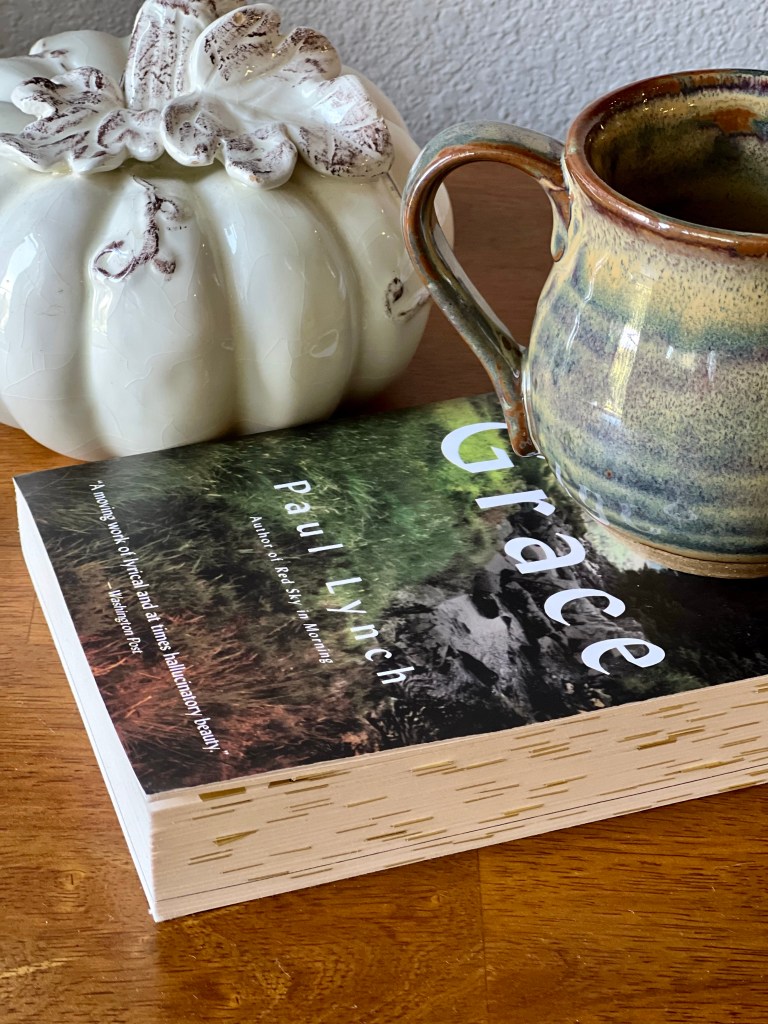
I am left with a book filled with many brass darts, underlined phrases, and the mixed feelings of deep love and appreciation together with immense feelings of sadness for the enormity of trouble many people are simply born into and cannot escape without trial and persistent struggle.
Grace lived a life filled with adventure and many masked moments of appreciative grace.


Leave a Reply